Home/Machining Guides
Machining guides
Notes from the shop floor: the questions that come up most often on quotations, answered without the sales language.

Notes from the shop floor: the questions that come up most often on quotations, answered without the sales language.
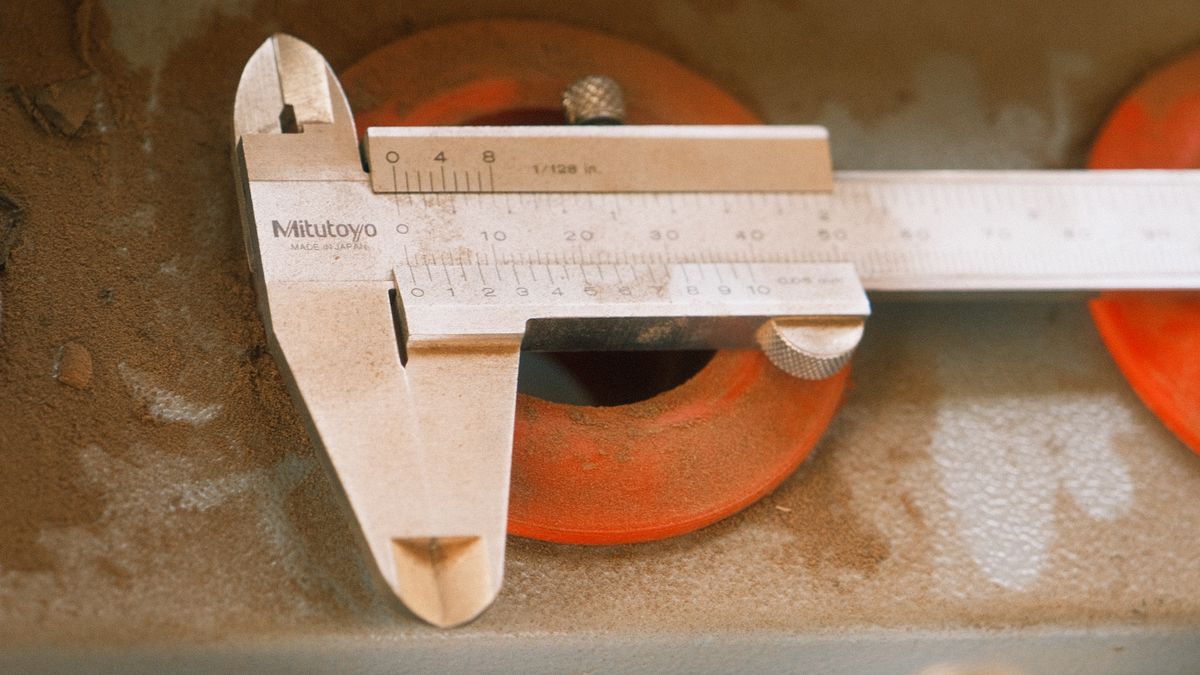

Four short guides, written for design engineers and buyers rather than for search engines. Each one is a decision you can make on the drawing, before the part is quoted.
Machining guide
Where wall thickness stops being a machining problem and becomes a drawing problem.
A wall does not deflect because it is thin. It deflects because the material on one side of it was removed after the other side was already finished.
The practical sequence is rough, stress-relieve, then finish with light radial cuts and support on both sides. What the drawing has to tell us is which wall is functional and which is cosmetic, because they are not machined the same way.
If a wall is specified at 1 mm and the tolerance is ±0.05, the process is decided before the price is. Ask for that conversation at quotation, not after the first article.
Machining guide
How depth-to-diameter ratio decides the process before the cost does.
Up to about 4:1, a standard drill and a boring bar will do the job. Beyond that, chip evacuation and drill walk start to decide the result, and the cost curve is not linear.
Between roughly 4:1 and 10:1, peck drilling with through-coolant and a boring pass is usually the economical answer. Past 10:1, gun drilling or EDM becomes the honest recommendation, even though the hourly rate looks worse.
The mistake is quoting all three at the same rate and letting the buyer pick the cheapest. The cheapest route is the one that matches the ratio.
Machining guide
What each process is actually for, and where they overlap.
Hobbing is fast for external spur and helical teeth and is the default for production. Shaping reaches internal teeth, shoulders and positions where a hob cannot run out. Grinding is what happens after hardening, when the tooth has moved.
The overlap is real: a small batch of external gears can be shaped as easily as hobbed, and a hardened gear that only needs a cleanup can sometimes be ground from a pre-cut blank.
What decides it is not the process name but the drawing: internal or external, hardened or not, and whether the mating part is being made at the same time.
Machining guide
The tolerances that get specified by habit and paid for on every unit.
A general tolerance note tighter than the function needs, applied to every dimension on the sheet, turns a comfortable part into an inspection exercise.
A surface finish callout on a face that never touches anything. A true-position tolerance on a hole that is only clearance. A corner radius smaller than the cutter that has to reach it. A material grade specified by habit when an equivalent would machine twice as fast.
None of these are wrong. They are just expensive, and each one is cheaper to change on the drawing than on the machine.
From the bench


Request a quotation
Tell us the part, the material and the quantity. An engineer reviews your drawing and replies within one working day — usually with a suggestion on how to make it cheaper.